If you’ve ever wondered about the difference between pastry and cake, this guide will explain everything in simple language. Whether you’re buying desserts for a celebration or just satisfying your sweet tooth, knowing the differences will help you make the right choice.
Desserts are loved by people of all ages, and among the most popular choices are cakes and pastries. Although both are sweet baked treats, they are not the same. Many people assume that a pastry is simply a smaller version of a cake, but each has its own ingredients, preparation methods, texture, and purpose.
What Is a Cake?
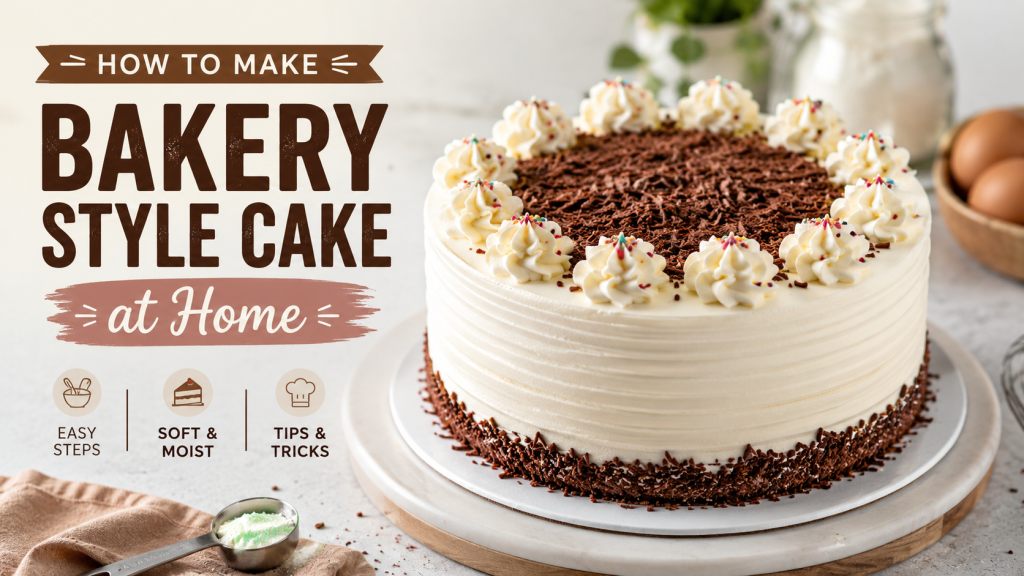
A cake is a soft, fluffy baked dessert prepared by mixing ingredients such as flour, sugar, eggs, butter or oil, milk, and a raising agent like baking powder or baking soda. The batter is poured into a baking pan and baked until it becomes light and airy.
Cakes are generally larger in size and are designed to be sliced into multiple portions. They are often decorated with buttercream, whipped cream, fondant, chocolate, or fresh fruits, making them the centerpiece of birthdays, weddings, anniversaries, and festive celebrations.
What Is a Pastry?
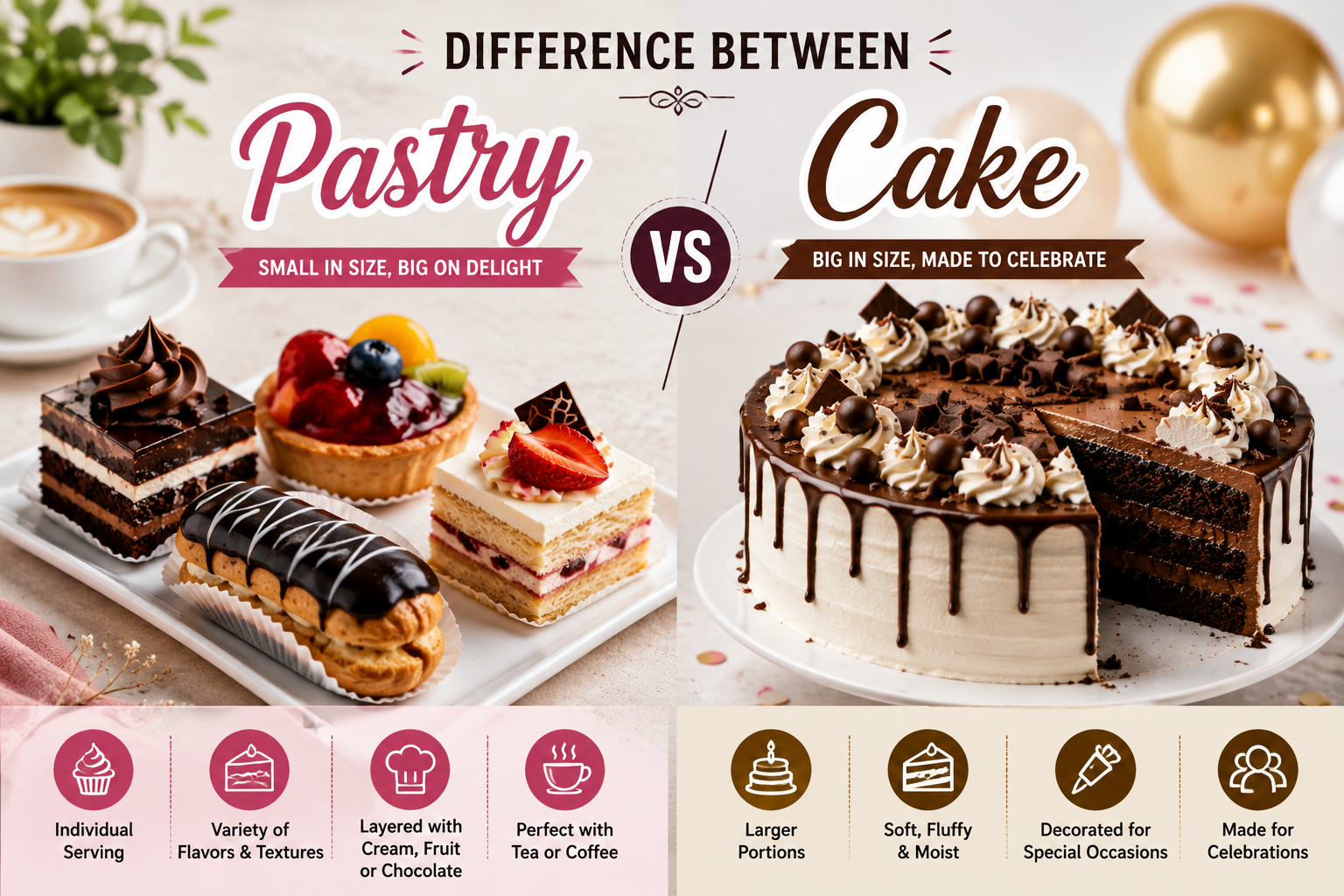
A pastry is a single-serving dessert that is carefully prepared using sponge cake, laminated dough, puff pastry, cream, mousse, custard, fruit fillings, or chocolate. Unlike cakes, pastries are usually made for one person and are known for their elegant presentation and rich flavors.
They are commonly available in bakeries, cafés, and dessert shops, where customers can choose from a variety of flavors and styles.
Difference Between Pastry and Cake
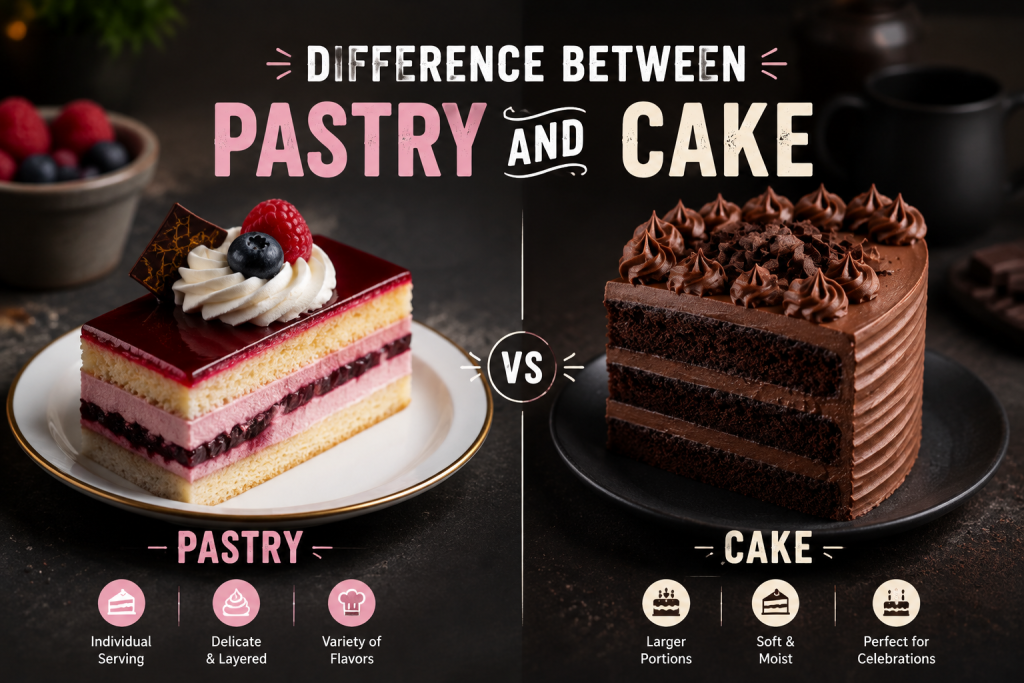
Although cakes and pastries share some ingredients, they differ in several important ways.
1. Size
One of the biggest differences is the serving size. Cakes are usually baked in larger pans and cut into slices for multiple people. Pastries, however, are individually prepared, making them ideal for a single serving.
2. Texture
Cakes are soft, moist, and fluffy because the batter contains raising agents that help it rise during baking.
Pastries can have different textures depending on their type. Some are flaky and crisp, while others are creamy, layered, or slightly dense due to their fillings and preparation techniques.
3. Ingredients
Traditional cakes are made using flour, eggs, sugar, butter, milk, and baking powder.
Pastries may include similar ingredients but often contain puff pastry sheets, laminated dough, custard, whipped cream, chocolate ganache, mousse, fruit fillings, or nuts to create unique flavors and textures.
4. Preparation Process
Preparing a cake mainly involves mixing a smooth batter and baking it until fully cooked.
Pastry preparation can be more detailed. Many pastries require layering dough with butter, filling with creams or fruits, chilling between stages, glazing, and decorative finishing.
5. Decoration
Cakes are commonly decorated with frosting, fondant, edible flowers, sprinkles, chocolate decorations, or personalized cake toppers.
Pastries usually feature elegant garnishes such as fresh fruits, chocolate curls, caramel glaze, powdered sugar, whipped cream, or finely chopped nuts.
6. Purpose
Cakes are mostly associated with celebrations where they are shared among family and friends.
Pastries are designed for individual enjoyment and are often served with tea, coffee, or as a quick dessert after meals.
Cake vs Pastry: Quick Comparison
Feature | Cake | Pastry |
Serving Size | Large and shared | Individual portion |
Texture | Soft and fluffy | Flaky, creamy, layered, or crisp |
Main Ingredients | Flour, eggs, sugar, butter | Dough, cream, custard, chocolate, fruits |
Preparation | Batter-based baking | Layering, filling, baking, or chilling |
Decoration | Frosting and fondant | Cream, fruits, glaze, chocolate |
Suitable For | Celebrations and parties | Everyday desserts and café treats |
Which Dessert Should You Choose?
Your choice depends on the occasion.
If you’re celebrating a birthday, anniversary, wedding, or festival, a cake is the ideal option because it can be shared with several people and becomes the highlight of the event.
If you simply want a delicious dessert for yourself or a sweet snack with coffee, a pastry is a better choice. Since pastries are available in many flavors, they offer greater variety without the need to buy an entire cake.
Popular Cake Varieties
Some of the most loved cakes include:
- Chocolate Cake
- Vanilla Cake
- Black Forest Cake
- Red Velvet Cake
- Butterscotch Cake
- Pineapple Cake
- Fruit Cake
Popular Pastry Varieties
Bakery display counters often feature pastries such as:
- Chocolate Pastry
- Black Forest Pastry
- Pineapple Pastry
- Strawberry Pastry
- Fruit Pastry
- Danish Pastry
- Puff Pastry
- Éclair
Conclusion
Understanding the difference between pastry and cake makes it easier to select the perfect dessert for any occasion. Cakes are larger, softer, and ideal for celebrations with family and friends, while pastries are individually served desserts that offer convenience and a wide variety of flavors. Both have their own unique appeal, and the best choice depends on your preference, the event, and how many people you’re serving. Whether you enjoy a beautifully decorated celebration cake or a creamy pastry with your evening coffee, both desserts are sure to satisfy your sweet cravings.
Frequently Asked Questions
Is a pastry just a small cake?
No. A pastry is not simply a smaller cake. It often uses Difference Between Pastry and Cake preparation techniques and may include puff pastry, cream, custard, or layered fillings that are not typically found in cakes.
Which is softer, cake or pastry?
Most cakes have a lighter and fluffier texture. Pastries vary depending on the recipe and may be flaky, creamy, crisp, or layered.
Can pastries be served at celebrations?
Yes. Pastries are a popular choice for office parties, dessert tables, and small gatherings, while cakes remain the traditional option for larger celebrations.
Why do pastries have different textures?
The texture depends on the type of pastry being made. Ingredients such as puff pastry dough, mousse, whipped cream, custard, and chocolate fillings create unique textures that differ from standard cake.